Quick rule
If a folder organizer does not tell you what to do with the next paper, it is only a nicer-looking pile.
Map the paper before the product
File folder organizers are easy to underestimate because they look simple: a few slots, a rack, a desktop sorter, or a set of labeled folders. But the best ones solve a daily behavior problem. They make the next step obvious when a receipt, contract, school form, invoice, or meeting note lands on the desk. Without that next step, even a beautiful organizer becomes another place where paper waits.
The first question is not how many folders you need. It is what kind of paper reaches the desk in the first place. Active work needs fast access. Reference papers need clear labels. Archive papers probably should not live on the desktop at all. When those categories are mixed together, the organizer fills quickly and the desk still feels unfinished.
Separate active and reference papers
The first question is not how many folders you need. It is what kind of paper reaches the desk in the first place. Active work needs fast access. Reference papers need clear labels. Archive papers probably should not live on the desktop at all. When those categories are mixed together, the organizer fills quickly and the desk still feels unfinished.
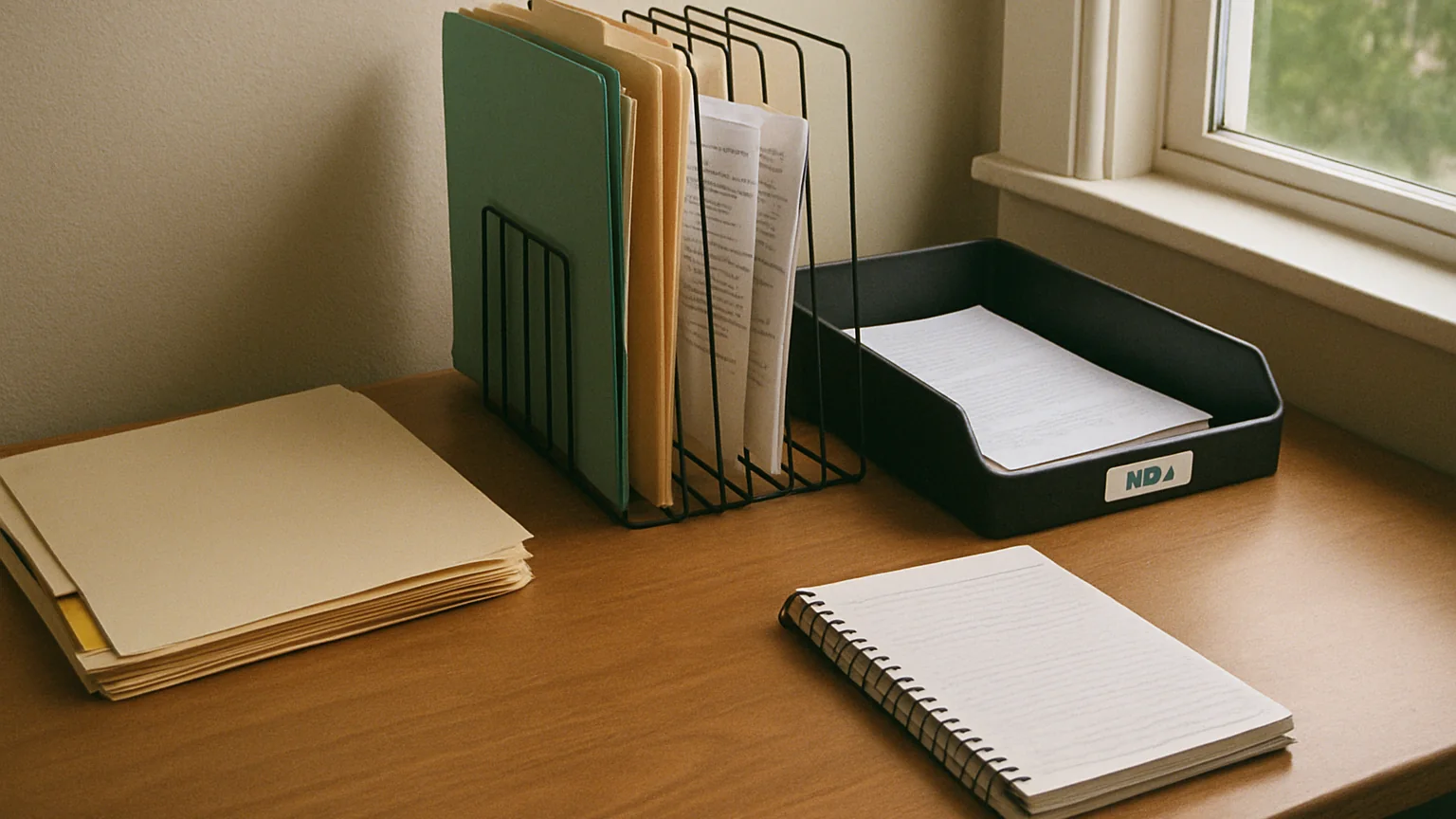
Vertical organizers are useful when papers need visibility. They help active projects, current bills, forms awaiting signatures, and short-term folders stay upright and easy to scan. Horizontal trays work better for a staged workflow: incoming, active, and done. Drawer folders are better for documents that matter but do not need to be seen every day.
Choose vertical, horizontal, or drawer storage
Vertical organizers are useful when papers need visibility. They help active projects, current bills, forms awaiting signatures, and short-term folders stay upright and easy to scan. Horizontal trays work better for a staged workflow: incoming, active, and done. Drawer folders are better for documents that matter but do not need to be seen every day.
Labels should be boring on purpose. A label like “current client forms,” “to scan,” or “receipts this month” is more useful than a clever category that requires interpretation. The test is whether someone can return a paper to the right place when they are tired, distracted, or rushing between calls.
Use labels that remove decisions
Labels should be boring on purpose. A label like “current client forms,” “to scan,” or “receipts this month” is more useful than a clever category that requires interpretation. The test is whether someone can return a paper to the right place when they are tired, distracted, or rushing between calls.
Small offices need a stricter paper boundary. If the organizer is too wide, it steals workspace. If it is too small, papers spill out and hide the categories. A compact upright sorter, one inbox tray, and a weekly file-away routine often outperform a large desktop file center.
Protect space in small offices
Small offices need a stricter paper boundary. If the organizer is too wide, it steals workspace. If it is too small, papers spill out and hide the categories. A compact upright sorter, one inbox tray, and a weekly file-away routine often outperform a large desktop file center.
A good shortlist should come from the way paperwork actually moves. The right file folder organizer should help papers enter, pause, move forward, and leave the desk. That movement matters more than material, color, or the number of compartments.
Shortlist by paper movement
A good shortlist should come from the way paperwork actually moves. The right file folder organizer should help papers enter, pause, move forward, and leave the desk. That movement matters more than material, color, or the number of compartments.
File folder organizers are easy to underestimate because they look simple: a few slots, a rack, a desktop sorter, or a set of labeled folders. But the best ones solve a daily behavior problem. They make the next step obvious when a receipt, contract, school form, invoice, or meeting note lands on the desk. Without that next step, even a beautiful organizer becomes another place where paper waits.
Good for visible work
Upright sorters help when folders must be scanned quickly during the day.
Good for staged work
Horizontal trays work when papers move from incoming to active to finished.
Desk paper decision matrix
Keep close and clearly labeled.
Use a tray or project folder.
Archive away from the desk.
When you are ready to compare products, return to the best file folder organizers for your desk list with these categories in mind.
How to test a file organizer before trusting it
Before treating any folder organizer as the final answer, run it through one normal week. Put every paper where it would naturally land, not where it would land on a perfect reset day. If the sorter is right, the labels will still make sense by Friday. If the wrong papers gather in the same slot, the categories are too broad.
A useful organizer also makes absence visible. When the tax folder, client folder, or school form slot is empty, you should know whether that is good news or a missing-paper problem. This is why simple physical sections can outperform a deeper drawer: they create a visible status board for documents that still need attention.
Material and placement notes
Metal mesh is sturdy and easy to scan, but it can look busy if colorful folders are exposed. Wood and fabric organizers feel calmer on a warm desk, though they may hide slim papers unless the tabs are easy to see. Clear acrylic can be neat for a modern desk, but it also exposes every receipt and form. Choose the material that makes the desk easier to keep calm in its real state.
Placement matters as much as the organizer itself. Keep active folders within arm's reach, but do not put long-term reference storage in the prime work zone. The surface directly in front of the chair should stay clear enough for writing, signing, sorting, and quick review. A file organizer that blocks that zone is too large or in the wrong place.
When to choose less storage
More slots are not always better. Extra sections invite extra categories, and vague categories invite postponed decisions. If you only handle three kinds of paper every week, a three-part system can be stronger than a twelve-slot organizer. Start small, then add capacity only when a real recurring category does not have a home.
The final decision should feel boring and repeatable. Incoming papers land in one place. Active folders stay visible. Finished papers leave the desk. Labels say what happens next. That is the quiet advantage of a good file folder organizer: it reduces tiny paper decisions before they become a pile.
FAQ
What type of file folder organizer is best for a desk?
The best type depends on whether your papers need visibility, staged action, or hidden reference storage.
Are vertical file organizers better than trays?
Vertical organizers are better for scanning active folders, while trays are better for a simple incoming-active-done workflow.
How many folders should stay on the desktop?
Keep only current or frequently handled categories on the desk. Archive and rare-reference papers should move elsewhere.
What labels work best?
Plain action labels such as to scan, current forms, receipts this month, and awaiting signature work better than vague categories.
Can a small desk use a file organizer?
Yes, but compact upright sorters or a single inbox tray usually protect more surface area than wide file centers.
Where should I compare options?
After mapping your paper flow, compare a focused file folder organizer shortlist.