Focused paper note
Paper Inbox Routine for file folder organizers
A practical support article about creating an inbox, action stack, and weekly clear-down.
Why paper inbox routine matters
This support note focuses on creating an inbox, action stack, and weekly clear-down.
The first question is not how many folders you need. It is what kind of paper reaches the desk in the first place. Active work needs fast access. Reference papers need clear labels. Archive papers probably should not live on the desktop at all. When those categories are mixed together, the organizer fills quickly and the desk still feels unfinished.
Start with paper behavior
File folder organizers are easy to underestimate because they look simple: a few slots, a rack, a desktop sorter, or a set of labeled folders. But the best ones solve a daily behavior problem. They make the next step obvious when a receipt, contract, school form, invoice, or meeting note lands on the desk. Without that next step, even a beautiful organizer becomes another place where paper waits.
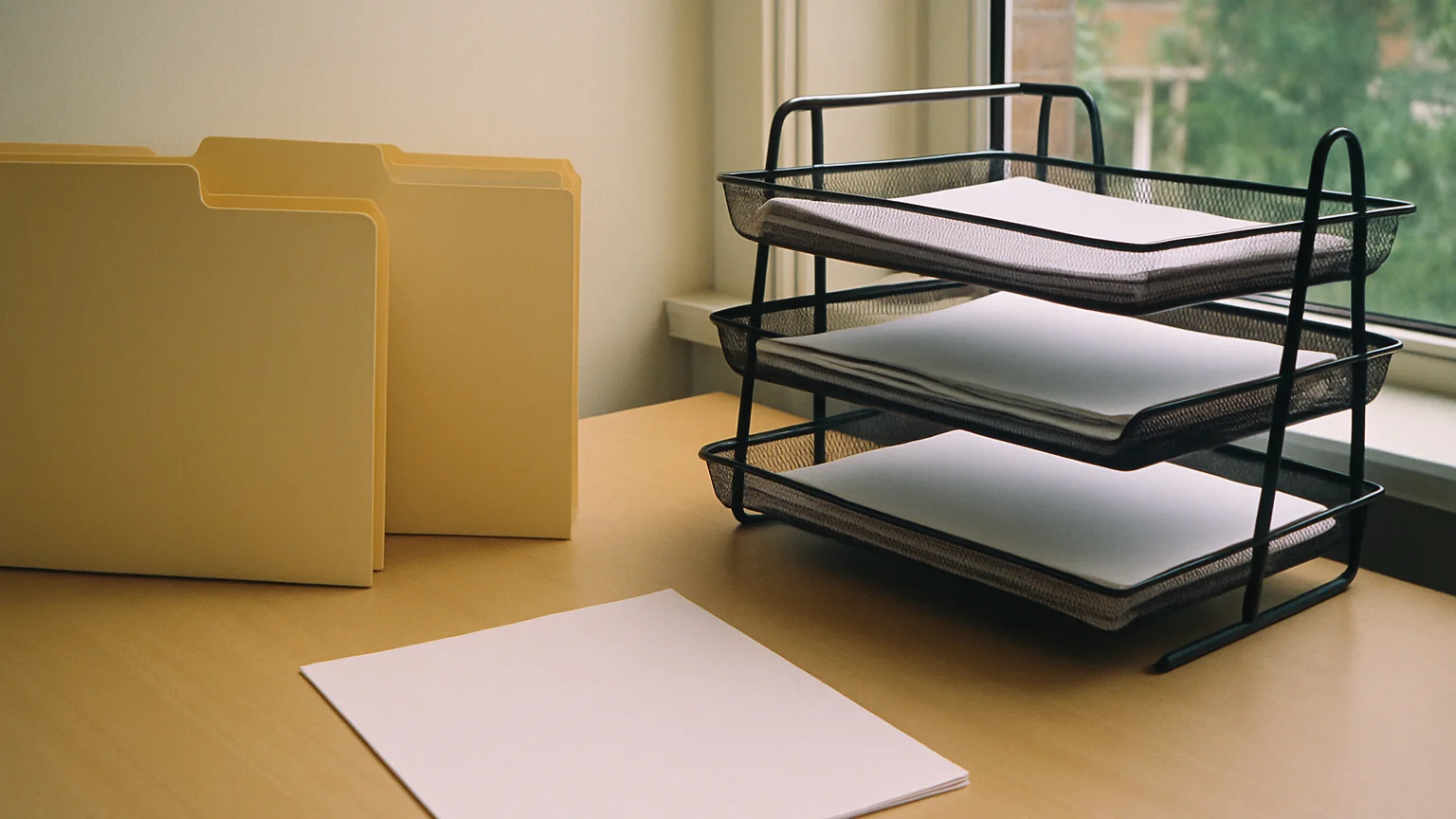
Vertical organizers are useful when papers need visibility. They help active projects, current bills, forms awaiting signatures, and short-term folders stay upright and easy to scan. Horizontal trays work better for a staged workflow: incoming, active, and done. Drawer folders are better for documents that matter but do not need to be seen every day.
Keep active files separate
The first question is not how many folders you need. It is what kind of paper reaches the desk in the first place. Active work needs fast access. Reference papers need clear labels. Archive papers probably should not live on the desktop at all. When those categories are mixed together, the organizer fills quickly and the desk still feels unfinished.
Labels should be boring on purpose. A label like “current client forms,” “to scan,” or “receipts this month” is more useful than a clever category that requires interpretation. The test is whether someone can return a paper to the right place when they are tired, distracted, or rushing between calls.
Choose a visible or hidden system
Vertical organizers are useful when papers need visibility. They help active projects, current bills, forms awaiting signatures, and short-term folders stay upright and easy to scan. Horizontal trays work better for a staged workflow: incoming, active, and done. Drawer folders are better for documents that matter but do not need to be seen every day.
Small offices need a stricter paper boundary. If the organizer is too wide, it steals workspace. If it is too small, papers spill out and hide the categories. A compact upright sorter, one inbox tray, and a weekly file-away routine often outperform a large desktop file center.
Make labels obvious
Labels should be boring on purpose. A label like “current client forms,” “to scan,” or “receipts this month” is more useful than a clever category that requires interpretation. The test is whether someone can return a paper to the right place when they are tired, distracted, or rushing between calls.
A good shortlist should come from the way paperwork actually moves. The right file folder organizer should help papers enter, pause, move forward, and leave the desk. That movement matters more than material, color, or the number of compartments.
Return to the main guide
After this detail is clear, return to the main file folder organizer guide.
File folder organizers are easy to underestimate because they look simple: a few slots, a rack, a desktop sorter, or a set of labeled folders. But the best ones solve a daily behavior problem. They make the next step obvious when a receipt, contract, school form, invoice, or meeting note lands on the desk. Without that next step, even a beautiful organizer becomes another place where paper waits.
Weekly paper reset
The organizer should get lighter each week, not heavier. Move completed papers to their permanent home, recycle what is no longer needed, and rewrite labels that have become too vague. A file sorter is successful when it supports decisions instead of postponing them.
Small-space note
In compact offices, a narrow vertical sorter or a single inbox tray often works better than a wide multi-section organizer. The goal is to preserve a clear writing and keyboard zone.
Quick checklist
- Name the repeated paper problem.
- Pick visible storage only for active papers.
- Move archive papers away from the desk.
- Use labels that describe the next action.
- Return to the main guide with those limits clear.
Real-world setup notes
After choosing a paper category, give it a physical limit. A folder, slot, or tray should have enough capacity for normal use, but not so much capacity that old papers can disappear inside it for months. When the section fills, it should trigger a clear action: scan, file, shred, recycle, reply, or archive.
The second test is speed. If a paper cannot be placed in the correct spot in a few seconds, the category is probably unclear. Simple labels beat perfect taxonomy. A busy person should be able to drop the document in the right place between calls without rereading every folder tab.
How this supports the main guide
This focused note is meant to clarify one decision before returning to the main file folder organizer guide. Once the paper behavior is named, product comparisons become easier. You can ignore organizers that are too wide, too hidden, too decorative, or too complex for the way papers actually move through the desk.
For most desks, the strongest system is a short chain: one landing place, one active project area, one reference area, and a weekly exit route. The exact product can vary, but the chain should stay simple enough to maintain when the office gets busy.
Common adjustment after two weeks
Many people discover that one label needs to change after the first few weeks. That is normal. Rename categories based on the papers that actually arrived, not the categories you expected to need. A file organizer should adapt to the work, not force the work into awkward sections.
What to review before buying
Measure the papers and folders you actually use. Letter-size papers, tabbed folders, slim notebooks, envelopes, and receipts do not all behave the same way. A sorter that works for crisp folders may fail with loose receipts. A tray that handles forms may be too shallow for project packets. Matching the organizer to the real paper mix prevents disappointment.
Also check the direction of use. Some people naturally file from the front of a sorter, while others reach from the side. Some desks need a low-profile tray under a monitor shelf. Others need upright folders near a printer or scanner. The best organizer is the one that fits the motion already happening in the room.
Simple maintenance rhythm
Set one weekly appointment with the organizer. Empty the inbox, move completed papers, rename confusing labels, and remove any folder that no longer represents active work. This rhythm keeps the product useful after the first neat week. Without it, even a premium file organizer can slowly become a decorative archive.
Keep the routine short. Ten minutes is enough when the categories are clear. If the reset takes much longer, there may be too many categories, too much paper living on the desk, or no clear exit route for finished documents.
FAQ
What should come first?
Name the paper behavior before choosing the organizer.
Should everything stay on the desk?
No. Keep active papers nearby and move reference/archive papers elsewhere.
What is the common mistake?
Buying more slots before creating clear action categories.
How do I maintain it?
Use a short weekly clear-down so the organizer does not become a paper archive.
Where should I go next?
Return to the main file folder organizer guide with your categories defined.